Background
During June of 2024 I was given the extraordinary opportunity to manage my very own iPhone repair company: SLO iPhone repair. One of my friends had been managing the business, but wouldn’t be able to continue doing so after his eventual graduation. So I took over the business, and the rest is history.
The Research stage
While business was good, I found the inconsistent sales volume to be problematic. Demand was surprisingly seasonal, and highly dependent on student activities. Because of this I decided to create a marketing campaign for the brand, and simplify other business activities.
I began by conducting market research and analyzing my sales data. (see below)

I was able to gain two important insights from the data. Firstly, sales seemed to be the lowest around the months when students were gone, so I should focus my marketing efforts on them as opposed to my other segments. Second, I discovered that the iPhone 11s were generating the most revenue, so I should always have extra stock of that model.
From here I conducted more market analysis on my competitors and found two main opponents. The below slides show my analysis of them and where they fit in.
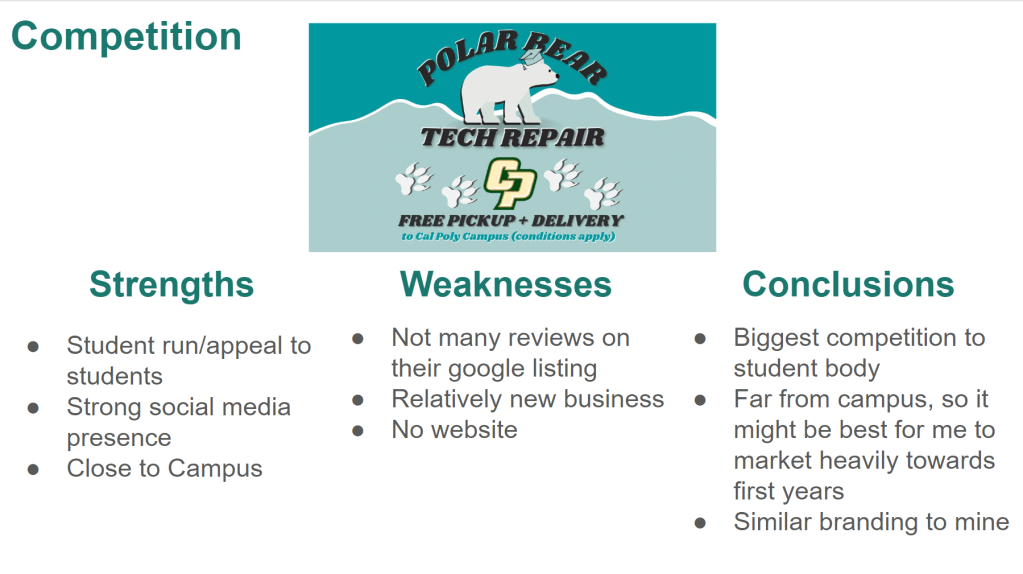
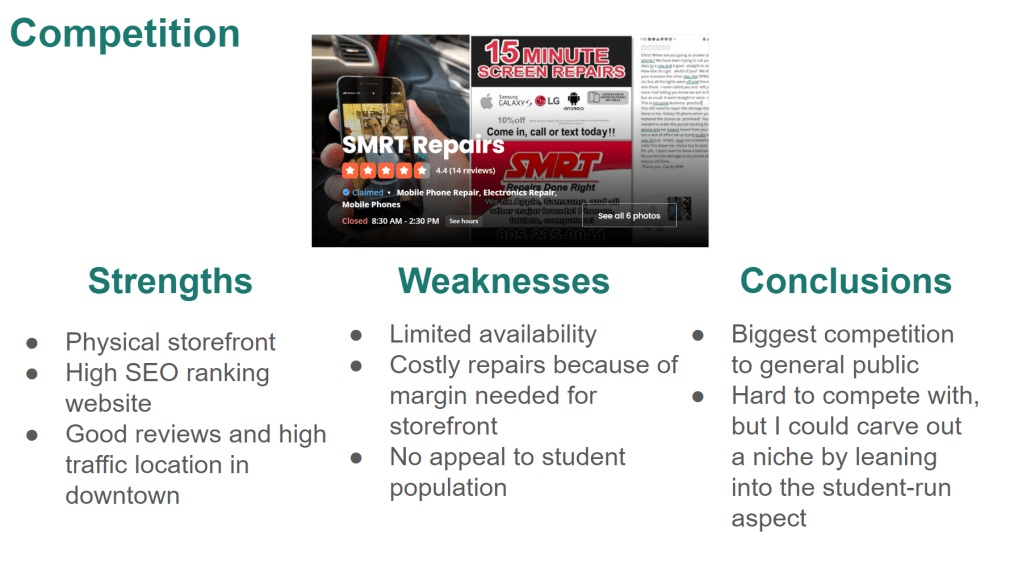
After analyzing these competitors, I realized that my target consumer were Cal Poly students, especially those who lived on campus. Because I ran the business out of my house right next to campus, a first year could walk to me, not to mention the SEO benefits of close proximity.
The Rebrand and Campaign
Once I knew my place in the local market and what strategies would work, I created a plan. I would create an official website to improve the brand, create a strong brand template, create video ads for students, and improve my quality of life as a manager/repair technician.
Website Creation – https://slophonerepair.com/ (The website may be taken down once my initial subscription runs out)
The website was a huge success, and added an easy way to legitimize the business and answer questions customers had. The FAQ section helped reduce the amount of calls for services that I didn’t offer, and the about me page helped put a face to the brand. The most useful feature was the auto appointment scheduler I created, which used a google form to set appointments up without me needing to field calls while I may have been busy in class. See the below pictures for examples of the home page and scheduling system. Finally, I managed to rank on the front page of Google for iPhone repairs in San Luis Obispo, which hugely benefitted my business volume.

Brand Template
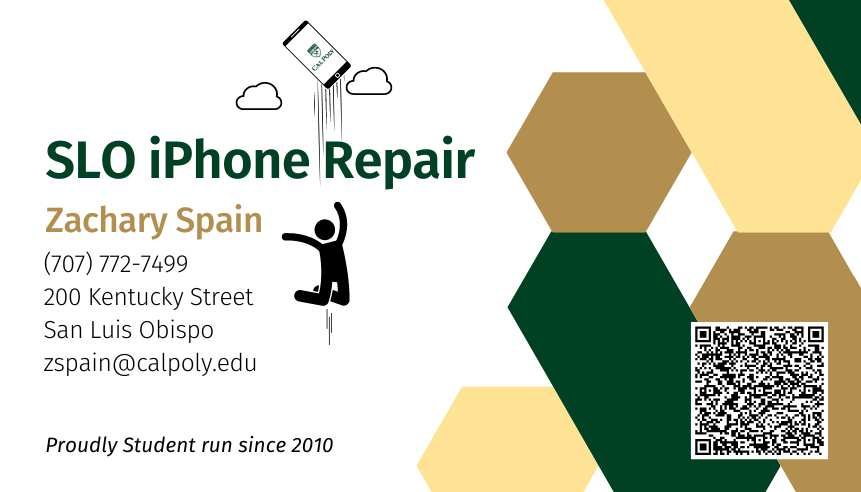
I created my own logo and brand language for use on the website. I tried to mirror the Cal Poly school colors as close as possible to attempt to appeal to students more and admittedly ride on their brand’s coattails. I also made my own business card to give to customers in the hope that they would give it to their friends.
Ad Campaign
This was the real meat and potatoes of my project, and I believe it provided the most value to my learning experience. My plan was to create short videos and post them to the Cal Poly Snapchat story, which all students can post to and see. However, most people would skip past an ad on this segment, so the ads needed to be sneaky. Because of this, most of the ads were shot to look like the average post on the platform to reel the students in. Below are links to all the ads in my Google drive, with statistics and results.
This ad got 1,028 impressions, created 5 leads, and led to 3 conversions. I liked the quality of the ad and the brand image it portrayed, but the low conversions was irksome. I believe this is due to the fact that those who urgently need a new phone screen, are incapable of actually watching this ad. So this ad, and the rest after it, focused more on brand building than driving actual conversions.
This ad got 1,031 impressions, created 3 leads, and led to 2 conversions. I thought this one was a good concept, but ultimately fell short of expectations. It did however establish the need for proper tags and links.
This ad was ridiculous. And ridiculously successful! It got 3,041 impressions, created 13 leads, and led to 8 conversions. I enlisted some friends to post this to their own respective class’s Snapchat stories so more people could see it, and timed it to release around the Saint Patrick’s day weekend where more students would be checking the Snapchat Story.
Ultimately I am happy with how these ads turned out, and I believe that they benefitted the brand’s presence on campus.
Quality of Life Improvements
Finally, I created various QOL improvements to help the business. Besides the aforementioned auto appointment calendar, I created a customer outreach plan and began to track inventory more closely. I would reach out to any negative reviews to attempt to right them, or at least appear more active on the platform. Finally, I set up reminders to order new inventory whenever a sheet detected that I was running low on a certain model.
Results
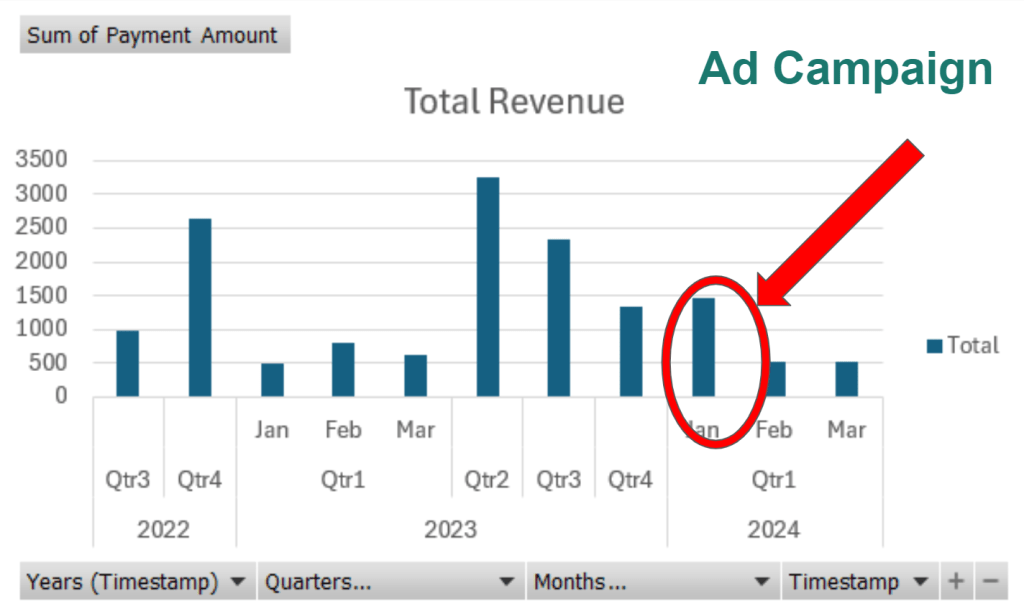
Overall the campaign was a success. During the time which the initial ads aired in January, my revenue was triple what it normally was during that month last year. While revenue eventually tapered off to what it normally was, I still greatly benefitted from the rebrand and QOL improvements in the following months. While the Saint Patrick’s day ad didn’t improve the month of March’s revenue that much, it still yielded many conversions. I learned a lot about marketing through this campaign, and am proud to have been able to apply my own touch to the business.
 Spain Brain
Leave a comment